Leadership | Learning & Development
Mastering the Talent Blueprint: The 4Cs Framework for Systemic Skill Retention
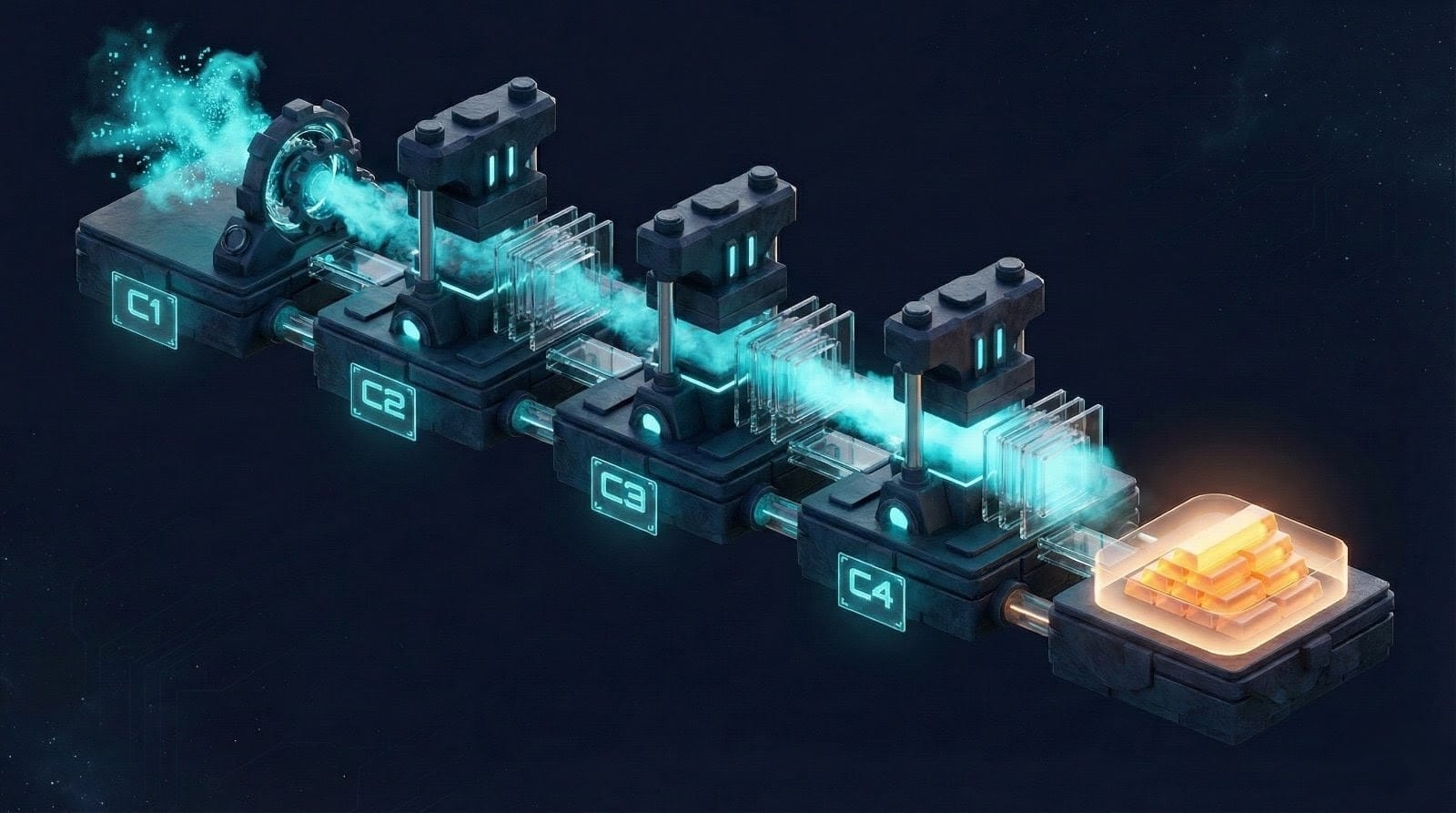
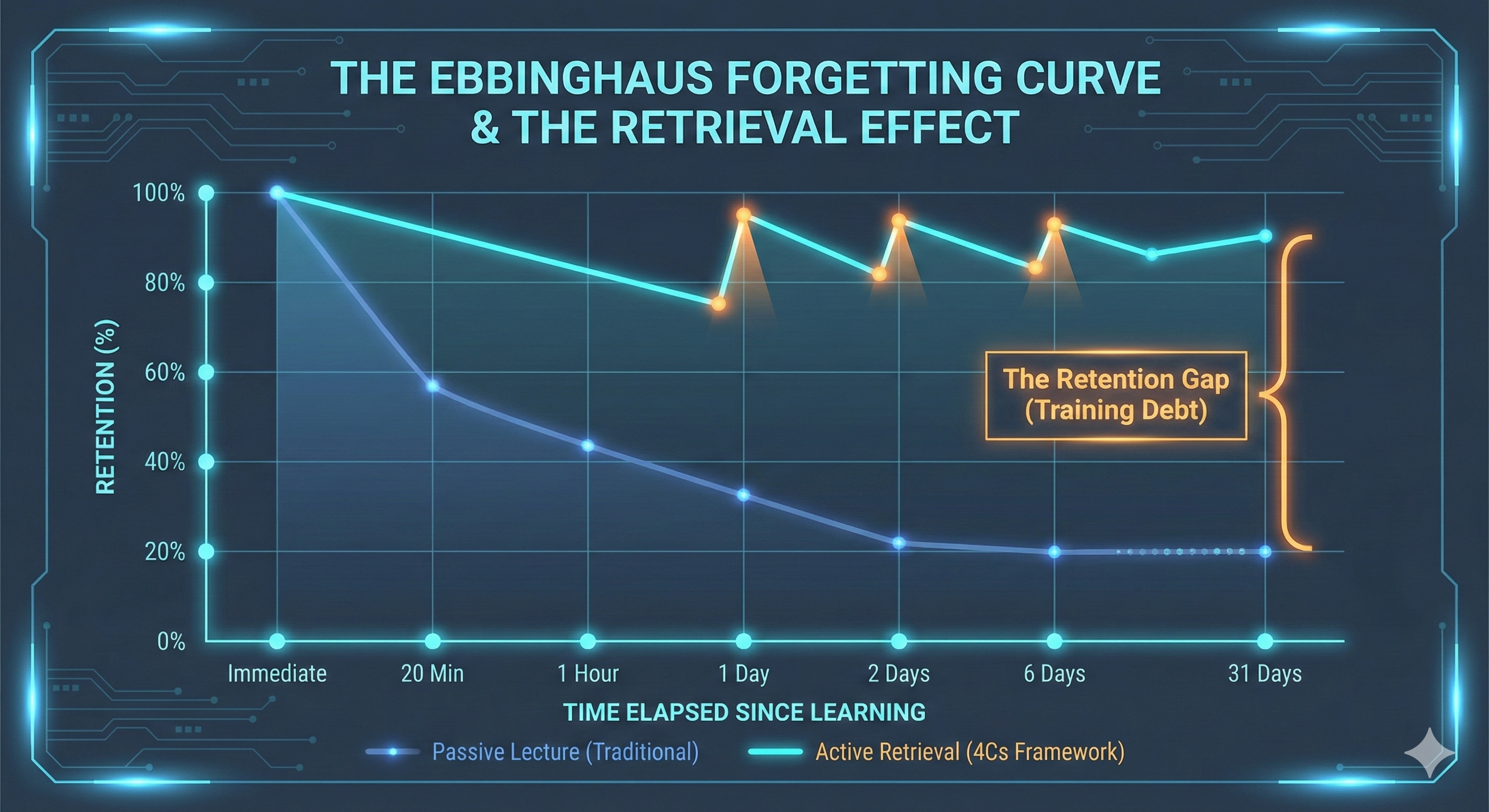
The 4Cs Framework is the foundational component of the Talent Architecture Blueprint, built to close the organizational learning gap and keep your OLR (Organizational Learning Rate) ahead of the MCR (Market Change Rate). This science-backed methodology shifts instruction from passive lecturing to active facilitation through four steps: Connections, Concepts, Concrete Practice, and Conclusions. As a result, learners actively retrieve and apply new knowledge, reducing training debt and driving behavior change that actually sticks.
The core mandate: Key takeaways
Retention comes from retrieval
Traditional passive learning methods like lectures are scientifically ineffective for long-term retention. The brain retains what it actively works to recall.
Embrace the 4Cs
Instead, use Connections, Concepts, Concrete Practice, and Conclusions to activate brain-friendly learning and drive behavior change.
Facilitate 80%, talk 20%
Prioritize learner activity and concrete practice. Telling is not training — the learner must do the work.
The extinction alert: OLR < MCR
When an organization’s learning rate falls behind the market change rate, it accrues what I call survival debt. Because of this, traditional passive training is not just a management problem. Instead, it becomes a systemic risk that actively accelerates obsolescence.
Stop lecturing. Start architecting.
Legacy training models that rely on one-way content delivery work against the team’s cognitive architecture. To reverse this, the 4Cs Framework applies active retrieval practice — not testing, but the engineering of memory. The framework then shifts the leadership role from content broadcaster to cognitive architect, so that measurable, systemic change becomes the standard output rather than the exception.
The visual below shows what that shift looks like in practice.

“The person doing the work is the person doing the learning.”
Strategic alignment: The Talent Architecture component
The systemic foundation
The 4Cs Framework is a load-bearing component of the Systemic Architecture Blueprint because it directly addresses the organizational learning gap: the survival equation for modern business. When this gap goes unmanaged, the consequences show up in performance data, not in culture surveys.
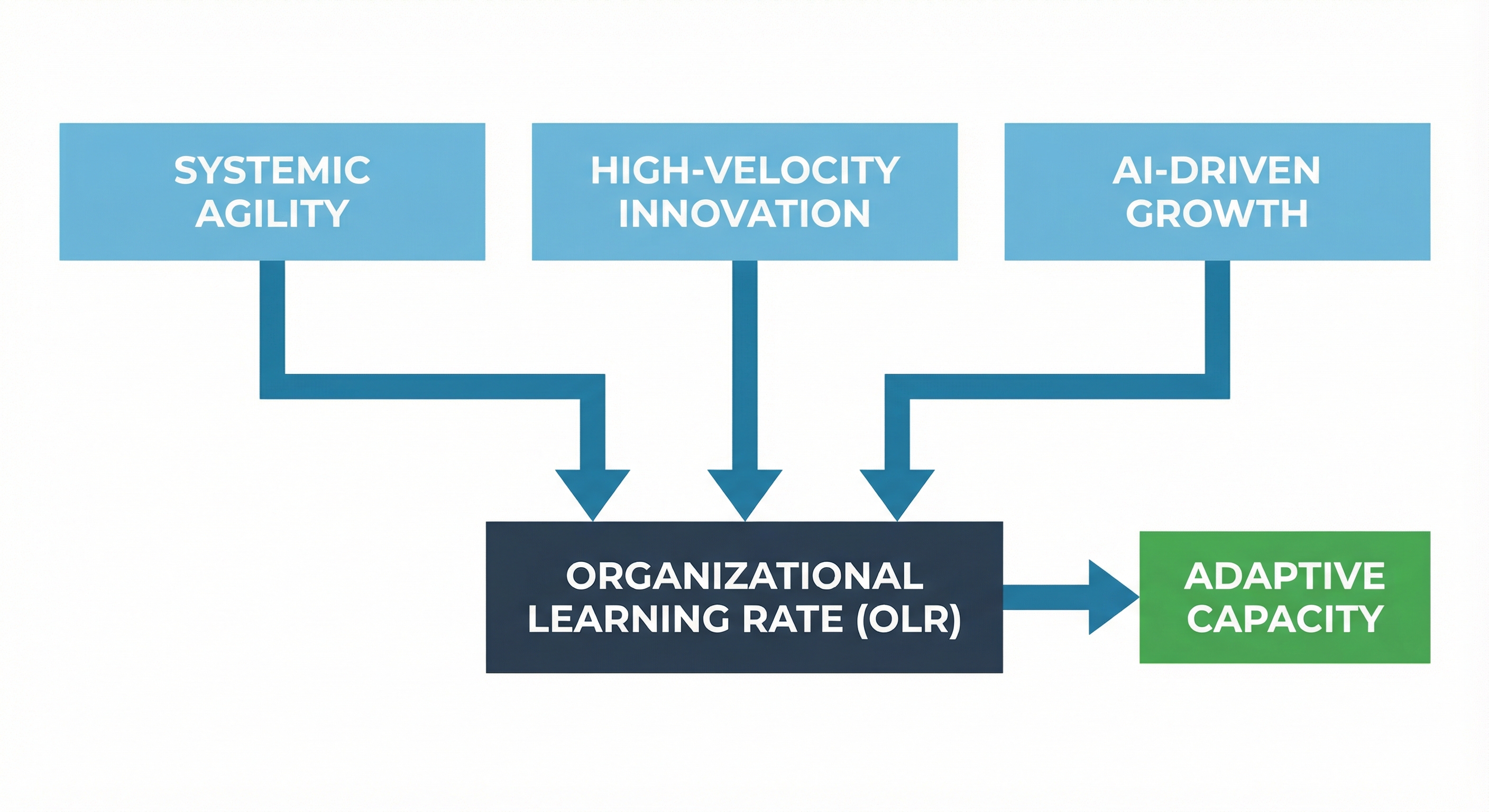
(Where OLR is Organizational Learning Rate and MCR is Market Change Rate)
Understanding the two variables
- Market Change Rate (MCR): The speed at which your operating environment, technology, or customer demands are evolving, driven primarily by AI and disruption. This is the external risk you must beat.
- Organizational Learning Rate (OLR): The speed at which your talent can acquire, apply, and retain new skills required to address the MCR. This is your internal capacity.
By mastering the 4Cs, you invest directly in accelerating your OLR, so that your internal capacity always exceeds the external rate of change.
Systemic architecture alignment
Indeed, the three cards below show how the 4Cs Framework, as an architectural standard, aligns with your organization’s highest strategic mandates:
Systemic agility
Blueprint pillar: Predictable value flow.
4Cs link
Action: Reduces training debt and improves consistency of value delivery by certifying skills.
Implication
The 4Cs standard must be mandated to secure predictable value flow across all delivery teams.
High-velocity innovation
Blueprint pillar: Controlled risk adoption.
4Cs link
Action: Ensures complex new models are absorbed and applied correctly, lowering the risk profile.
Implication
Use the 4Cs to certify all training on new technologies, mitigating risk before launch.
AI-driven growth
Blueprint pillar: Optimal human-AI augmentation.
4Cs link
Action: Translates abstract AI strategy into concrete, augmented human execution via personal action plans.
Implication
The 4Cs is the required transfer mechanism from AI strategy to measurable human execution.
The 4Cs framework
The 4Cs Framework is built on one principle: “The person doing the work is the person doing the learning.” As a result, leaders and trainers must shift their role from content delivery to designing and facilitating high-impact learning experiences. When that shift happens consistently, OLR accelerates — and survival debt shrinks.
C1: CONNECTIONS
The system primer: Activate social learning and prime the brain for new input by ensuring the learner connects with the topic, with each other, and with the purpose of the session.
Playbook action: Before presenting any new content, ask learners to discuss a current challenge or a related personal experience. As a result, this activates prior knowledge and builds high-trust engagement before anything is taught.
Systemic mandate: Verify engagement pathways. If a learner cannot articulate why the training topic matters to their goals, the session cannot proceed.
C2: CONCEPTS
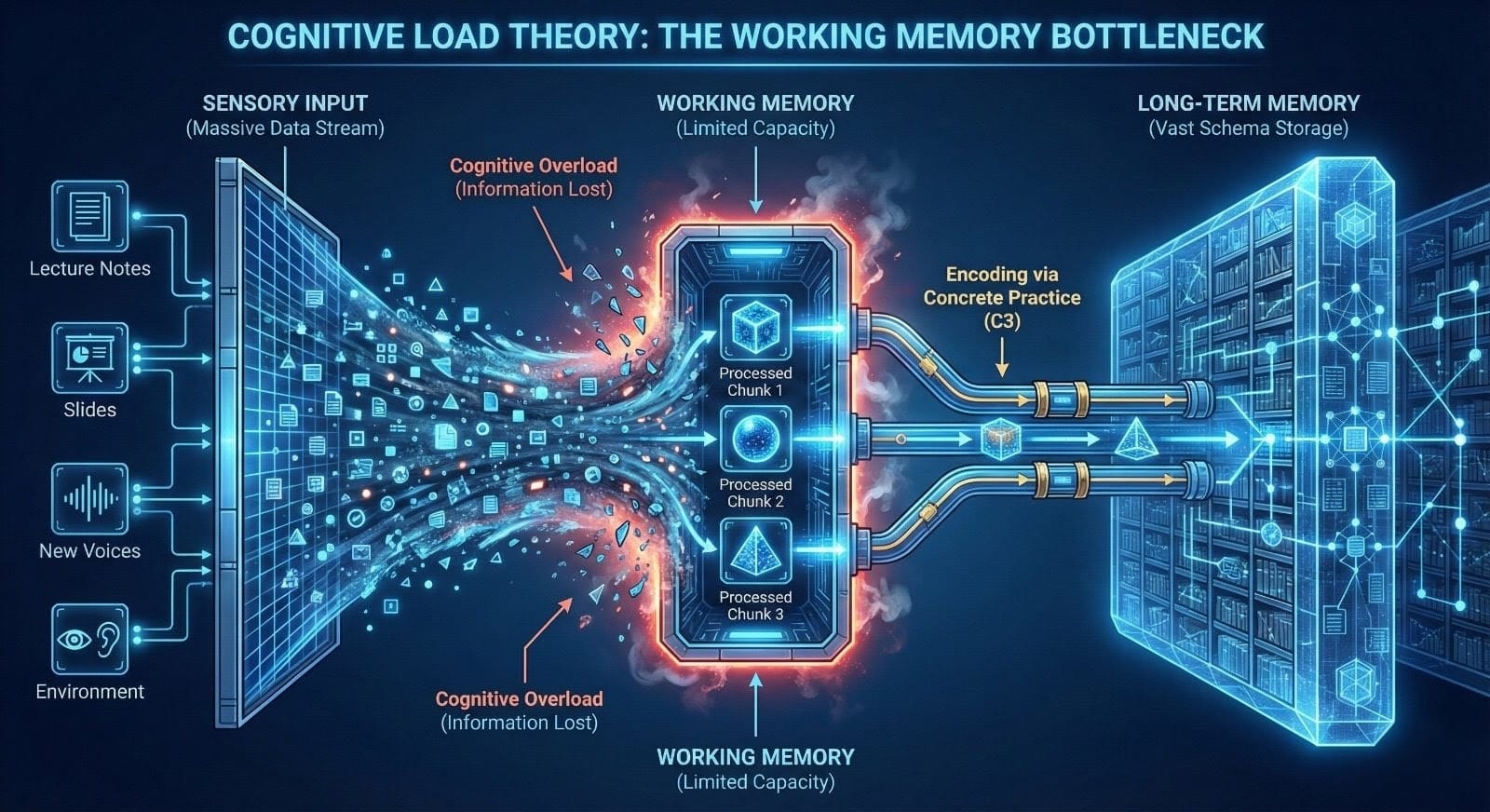
The architecture briefing: Present critical new information in short, multi-sensory bursts. Also, this manages intrinsic cognitive load and respects the brain’s limited working memory, where overloaded content is simply dropped.
Playbook action: Keep direct instruction to 10 minutes or less. Use strong visuals, real-world stories, and high-impact metaphors. Never use a list or definition when an analogy will do the job better.
Systemic mandate: Prevent cognitive overload. Teach one concept deeply rather than five concepts superficially. Comprehension quality matters more than information quantity.
C3: CONCRETE PRACTICE
The build phase: The most critical step. Learners must immediately do something with the new information to force active retrieval. When they do, that is where learning becomes executable.
Playbook action: Design scenarios where learners must test, apply, or struggle with the concept in a safe environment. For example, if the topic is writing better user stories, the immediate task must be writing and receiving feedback on a real user story. No exceptions.
Systemic mandate: Certify application readiness. The session must not end until every learner has applied the core concept. The activity serves as an instant metric for skill acquisition and potential training debt.
C4: CONCLUSIONS
The final integration: Then, transfer ownership of the knowledge from the facilitator to the learner by solidifying the learning through reflection and commitment. This is where intent becomes action.
Playbook action: End the session by asking learners to summarize their key takeaways and write a personal action plan detailing the one thing they will do differently tomorrow (the action prompt).
Systemic mandate: Bridge learning to systemic action. This step validates that the knowledge doesn’t stop in the classroom but immediately initiates behavioral change in the workplace, closing the loop between training architecture and organizational flow.
Proof of system: the capability multiplier
Although they sound similar, the distinction that matters here is between “training” (a one-time event) and “capability building” (a systemic output). McKinsey’s “Performance through People” report confirms that organizations classified as people-and-performance winners — those that aggressively build human capital — financially outperform their peers. As a result, the 4Cs Framework is the operational engine designed to place you in that tier by replacing passive training events with measurable capability building.
The evidence: performance through people
The methodology: Standard information sharing. The “sage on the stage” model where employees consume content without immediate, concrete application.
As a result, organizations relying on this model report stagnation in performance metrics despite heavy investment in L&D platforms.
The business risk:
Inability to match market change rateThe methodology: Integrated capability building. In contrast, the 4Cs Framework forces the learner to solve real business problems during the session through concrete practice.
- The data: People-and-performance winners are 4.2x more likely to consistently outperform their peers.
- The mechanism: The 4Cs converts abstract training spend into the execution capacity required to achieve that return.
The business upside:
4.2x likelihood of outperformanceThe leadership mandate: Sustaining the blueprint
Required behaviors
-
Certify the 80/20 facilitation ratio: Leaders must ensure time spent designing activities far exceeds time spent delivering content. The ratio is the standard, not a suggestion.
-
Prioritize experience architecture: Invest leadership time in creating repeatable, high-fidelity practice scenarios that transfer directly to on-the-job performance.
-
Install timeboxed discipline: Timeboxing is a non-negotiable mechanism for focus. When time is unconstrained, attention disperses and retention collapses.
Systemic risk mitigation
-
Mitigate cognitive overload risk: Never sacrifice depth for breadth. Teach one core concept deeply. When you cover five topics at surface level, learners retain none of them.
-
Decommission passive learning: Passive listening is a failure point. Ensure frequent, observable interaction so that you know whether learning is actually occurring.
-
Eliminate the practice gap: Because concrete practice (C3) is required, skipping it introduces systemic risk by creating skill debt that compounds across the organization.
Be the architect, not the lecturer
Effective organizational leadership is not about delivering information. Instead, it is about architecting the conditions for discovery and predictable skill retention. By shifting your role from lecturer to facilitator and applying the 4Cs Framework, you directly accelerate your organizational learning rate. Indeed, that is the only verifiable way to ensure your internal capacity stays ahead of an accelerating market.
ACCESS THE EXECUTIVE TOOLKIT
Three resources to implement the 4Cs framework and accelerate your training design this week.
- View Deck
The Terminal Deck
The strategic briefing on the 4Cs Talent Architecture standard.
- Download
The 4Cs Workshop Template
An Excel template for structuring and mapping specific activities to each of the four steps.
- Launch AI Tool
4Cs Learning Architect AI
The specialized AI tool to design a customized, full 4Cs Framework structure for any training session.